

The promise of convenience with AI website builders can sound irresistible. But for established medical practices, dental clinics, and growing businesses, relying on an AI tool to generate your primary digital front door creates more problems than it can solve.
While AI website generators can mock up a visual layout in seconds, upfront convenience comes with hidden high interest rates and puts your website into technical debt down the road. What actually happens under the hood when you build an AI-generated website? Here are the critical flaws every business owner needs to understand before choosing an AI-generated website.
FAQ: Understanding the Reality of AI Website Builders
Q: Why do AI-generated websites all end up looking so similar?
A: AI models generate designs based on statistical averages of existing web data. Rather than building a website that demonstrates a unique brand identity tailored to your specific local audience, AI tools rely on predictable, recycled layout patterns. This results in generic "AI slop" that fails to build trust with users or differentiate your practice from nearby competitors and the thousands of generic websites floating around the web.
Q: Can an AI-generated website hurt your SEO?
A: Yes. AI website builders frequently generate bloated, unoptimized code, hardcoded text elements, and weak technical schema. This leads to slow page load speeds, poor Core Web Vitals performance, and lower ranking potential on search engine results pages (SERPs).

The 5 Core Problems with AI-Generated Websites
1. Bloated Code & "Vibe Coding" Errors
AI website generators are designed to output visual layouts fast, but they still need expert oversight to prioritize backend code efficiency.
Duplicate Scripts: AI engines are getting better, but they still inject unnecessary inline CSS, redundant JavaScript, and unoptimized styling libraries.
Slow Page Load Speeds: This code bloat hurts your site's speed, especially on mobile devices.
Difficult Maintenance: When your website’s foundational code is generated without clean, readable architecture, web developers are often unable to fix or edit it later, forcing a complete and costly rebuild from scratch.
2. Generic, Low-value Content
Lack of Local Substance: AI generators default to vague filler phrases like "We provide high-quality, comprehensive solutions tailored to your unique needs."
No E-E-A-T: Google and AI discovery engines heavily prioritize Experience, Expertise, Authoritativeness, and Trustworthiness. Generic AI website content is exactly that: generic. Especially for a medical practice, it can’t map out a uniquely strategic patient journey, missing the nuances required to convert a website visitor into an in-office appointment.
3. Serious Security and Compliance Risks
Security requires intentional website architecture with expert oversight, which automated builders lack.
Unvetted Code: AI builders can generate code snippets that bypass proper input validation, exposing your site to cross-site scripting (XSS) and SQL injection vulnerabilities.
Data Privacy & Compliance Gaps: Especially for healthcare, dental, or eye care practices, collecting patient data through unvetted AI forms raises major HIPAA and data privacy concerns. If your patient data is fed back into public LLM training sets, it creates an immediate compliance violation.
4. Poor Scalability and Integration Limitations
Your website should evolve as your business grows. AI website builders build for immediate visual output, not long-term business scalability.
Third-Party Integrations: Integrating custom online scheduling, patient portals, CRM tools, or multi-location management requires robust API handling that AI builders struggle to execute reliably.
Vendor Lock-In: Most AI builders lock your site into their closed, proprietary platforms. If they raise their prices, lose features, or shut down, you risk losing your entire digital infrastructure.
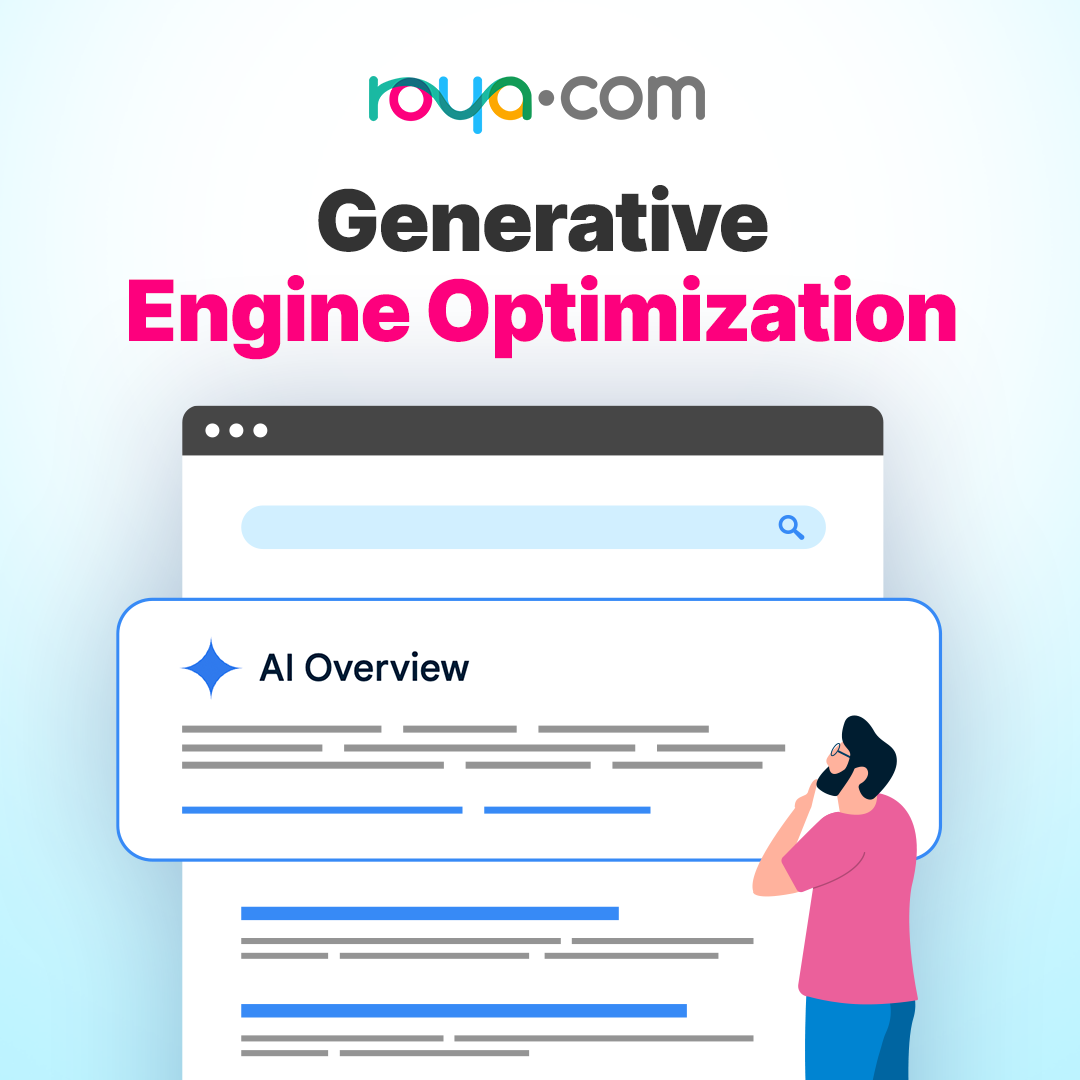
5. Weak Search Engine & Generative Engine Optimization (GEO)
A pretty template is useless if search engines can't trust or efficiently cite its content.
Missing Structured Data: AI-built sites lack clean, multi-layered JSON-LD schema necessary for the future of your website’s visibility on Google and AI search engines.
Missing Link Hierarchies: AI tools frequently mess up page hierarchies and internal linking structures, making it difficult for web crawlers to index deep service pages.
Q: What is the alternative to an AI-built website?
A: Custom-coded, platform-backed web development. For medical practices, the best way to ensure their website is optimized for speed and security is to work with expert designers and technical SEO strategists who engineer custom site architecture, audit security, and ensure long-term scalability.
Building a Scalable, Future-Proof Platform with Roya
At Roya.com, we believe that AI should be used as a powerful tool for strategy and new patient acquisition, not as a lazy substitute for strategic web development.
Don't let a generic AI template or other generic WordPress templates with unmanaged code hold your practice back from attracting high-value patients.